Tracking a Shipment From China: Why Numbers Change and What Each Update Really Means
"Where is my order?" is the most common question in cross-border buying, and it is often hard to answer with one tracking number. Goods bought in China through a warehouse pass through several systems: the seller's domestic courier, the warehouse's own records, an international carrier and finally a local delivery operator. JTLGO, a China sourcing and DDP logistics service, explains this in its answer on how to track a package from China. The short version: track by stage, not by number.
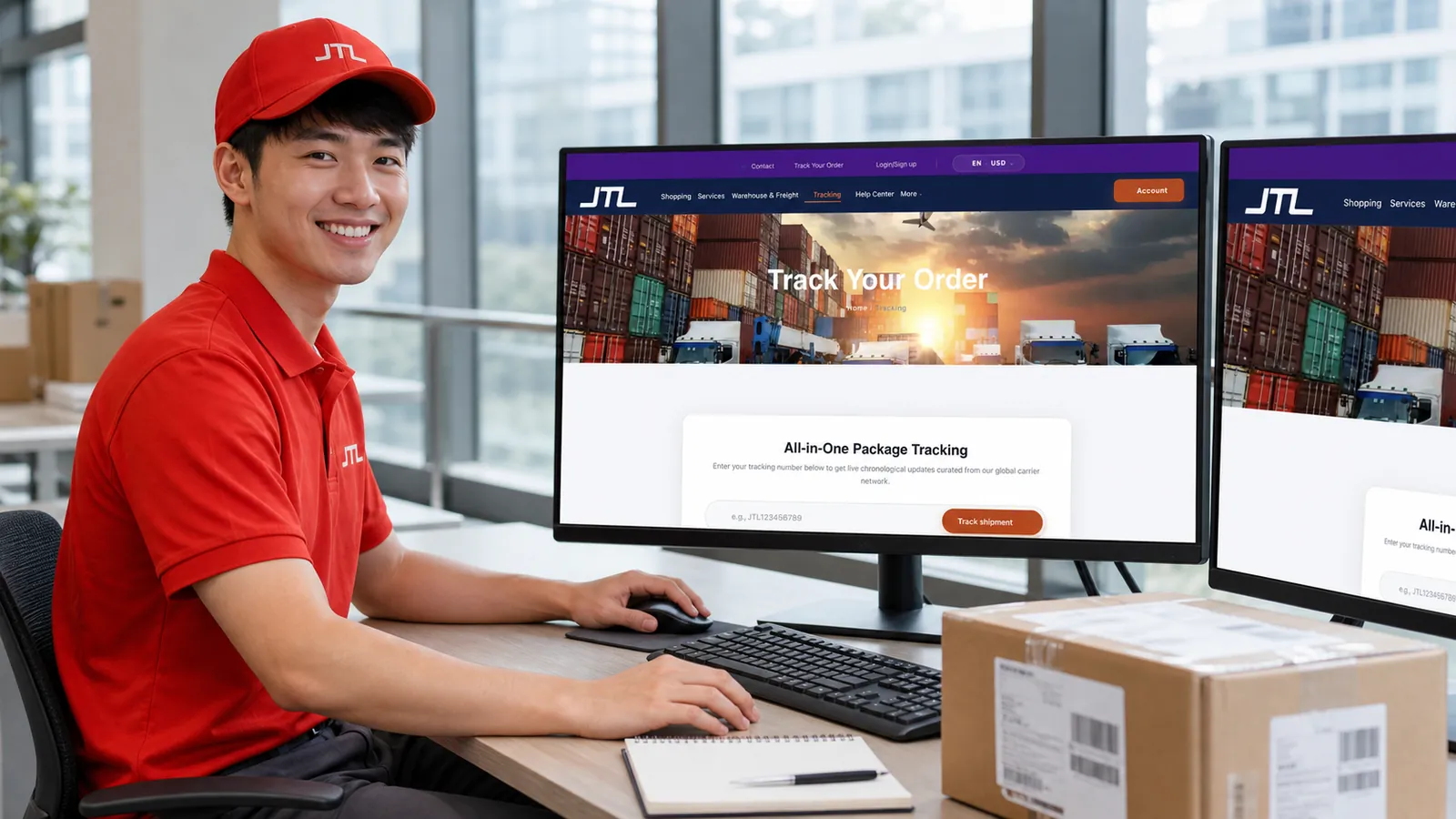
A support specialist at a logistics desk reviewing shipment timelines on screen beside a scanned parcel. Image: jtlgo.com.
Know which stage your order is in
JTLGO describes six stages: supplier domestic delivery, China warehouse receiving, international carrier handoff, export, customs, and final-mile delivery. Each has its own source of information.
- Domestic seller tracking usually ends when the parcel reaches the China warehouse.
- At the warehouse, the order is registered and photographed. JTLGO's account records show order and parcel status at this point.
- International tracking often begins only after warehouse dispatch and carrier handoff.
So the first question is which reference you hold: a supplier tracking number, a JTLGO order number, or an international tracking number. Each answers a different part of the journey. JTLGO's tracking page is the place to look up shipments it has dispatched.
Why the tracking number changes
JTLGO's answer notes that a tracking number may change after consolidation. When several seller parcels are combined into one shipment at the China warehouse, the domestic numbers stop being useful and a new international reference takes over. If you later receive a local delivery reference as well, keep the original too, and ask how they correspond so you can follow the same inquiry without losing history.
The same answer explains that tracking can pause during export, airline movement, customs review or final-mile transfer. A gap is not automatically a problem.
A person making a phone inquiry beside a clipboard, carton and bagged automotive part. Image: jtlgo.com.
Read each update in its own system
JTLGO's guide to shipment updates from arrival to delivery makes a distinction that saves a lot of confusion: arrival at a port, completion of clearance, handover to a delivery operator and receipt at the agreed destination are different events. "Arrived" does not mean your goods have reached your warehouse or shop.
The guide suggests clarifying each milestone instead of asking a single "where is it?":
- Arrival at a gateway: actual location, date and which packages it covers.
- Clearance in progress or completed: whether information is outstanding, and whether release has been confirmed.
- Available for onward movement and handed to a delivery operator: who now holds the delivery task.
- Delivery planned and received: whether there is an agreed appointment, and which packages reached the agreed point.
A status label is meaningful only with its definition. "Clearance update" does not necessarily mean clearance has finished, and "delivery scheduled" does not mean a vehicle has left. Keep the exact wording and timestamp when you ask about it. The guide also cautions not to assume every route provides every event, or the same labels.
Check that an update covers the whole order
A multi-carton order may have several package references. Match tracking information to the packing list rather than assuming one event covers every box. JTLGO recommends keeping a simple list of package identifiers, related order lines and last confirmed events. Describe gaps precisely, for example "two crates have an update and the third does not", because that is a comparison of records, not proof that something is lost.
For DDP shipments, also keep the quote's delivery point beside the shipment reference. JTLGO's DDP shipping page explains what the agreed scope covers.
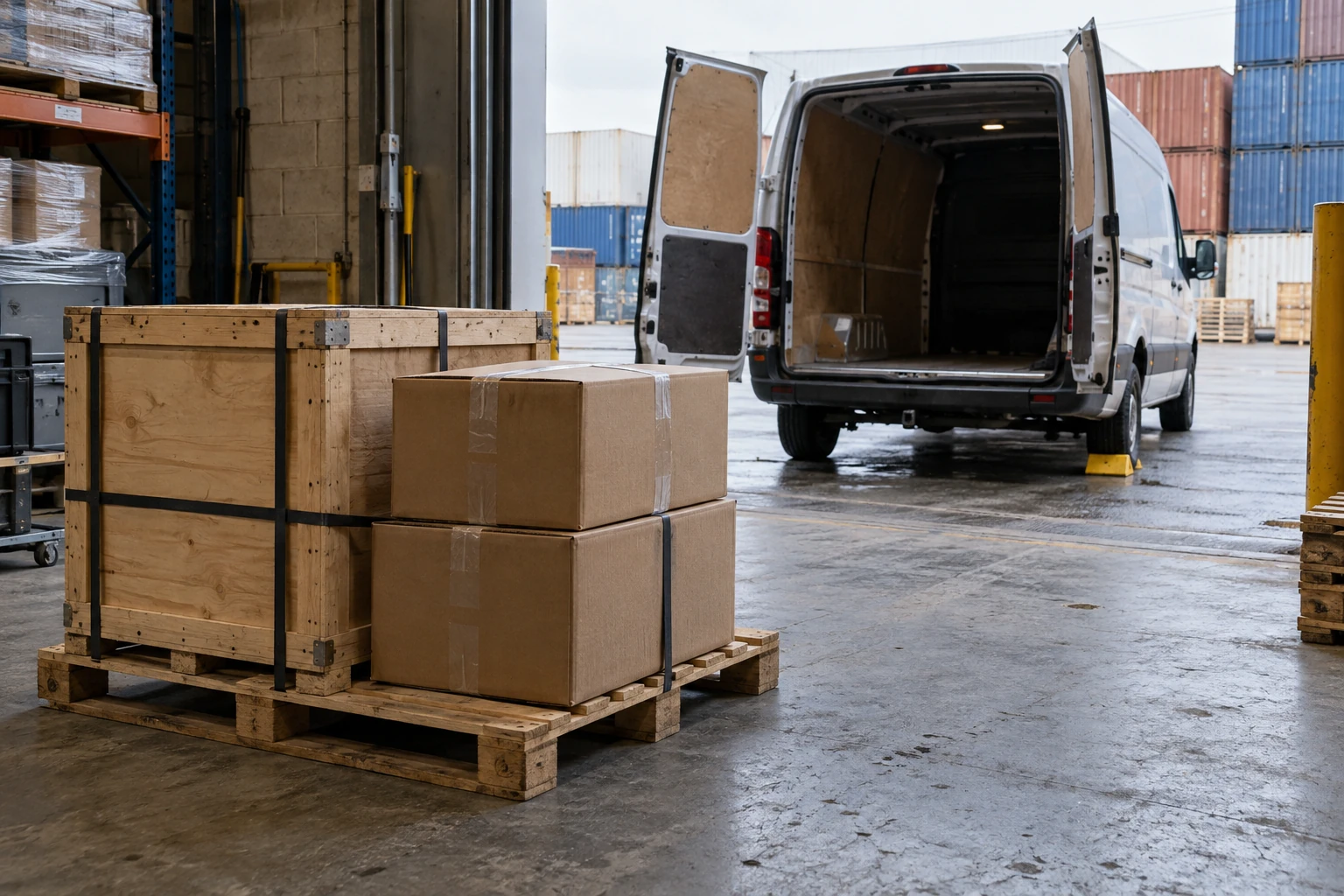
A strapped crate and cartons on a pallet near a delivery van at a loading bay. Image: jtlgo.com.
It helps to plan the receiving side as well. JTLGO's arrival guide suggests turning a delivery notice into a receiving plan. In practice that can mean confirming who will be on site, whether unloading equipment is needed for pallets or crates, and how cartons will be counted against the packing list on arrival. If something is short or visibly damaged, note it on the delivery record and photograph it before signing, because a clean signature makes later questions much harder to raise. These steps take a few minutes and turn a tracking update into a delivery you can actually check.
What to send when tracking stops moving
JTLGO's tracking answer lists what support needs: the tracking number or order number, the destination country, the last scan event and its date, and whether the package was consolidated or shipped separately. Its arrival guide adds that you should agree in advance which updates will be sent proactively and how to reach the responsible team, rather than assuming a universal update interval. If a status stays unchanged, send the reference, the last visible event and its time, and any earlier reply.
Contact support if there is an exception or no movement for an unusual period. JTLGO accepts inquiries through its contact page, WhatsApp and email.
FAQ
Why does my China tracking stop updating?
Tracking can pause during export, airline movement, customs review or final-mile transfer, according to JTLGO.
Why did I get a new tracking number?
A number may change after warehouse consolidation, when parcels are combined into one international shipment.
Does "arrived" mean my goods are ready for delivery?
Not necessarily. Arrival, clearance, handover and delivery are separate events.
Which number should I use after dispatch?
Use the international tracking number for carrier updates once the shipment leaves the warehouse.
What should I include in a tracking inquiry?
Tracking or order number, destination country, last scan event and date, and whether the package was consolidated. Email sales@jtlgo.com.
Contact JTLGO: email sales@jtlgo.com · WhatsApp +86 139 2810 3300 · No. 20, Zhongshan 6th Road, Zhongshan City, Guangdong, China · jtlgo.com